
This summer I was traveling through Thailand and Vietnam. What struck me most wasn’t the temples or the food or the heat. It was the phones. Everyone on their screen, all day. Vendors at the market, kids at the table, monks on the street. Constant scrolling. The phone had become the first thing, before the person in front of you, before the meal, before the moment. Human interaction, presence, the simple act of being somewhere with someone, all of it taking second place to a screen. And at the same time, I was watching those same phones do things I couldn’t do without a translator a few years ago. Real-time translation breaking language barriers I would have hit hard. Payments with a QR code where there was no bank branch for miles. Technology that opened up real access for people who had very little of it before. Both things were true at once. The obsession was real. So were the benefits.
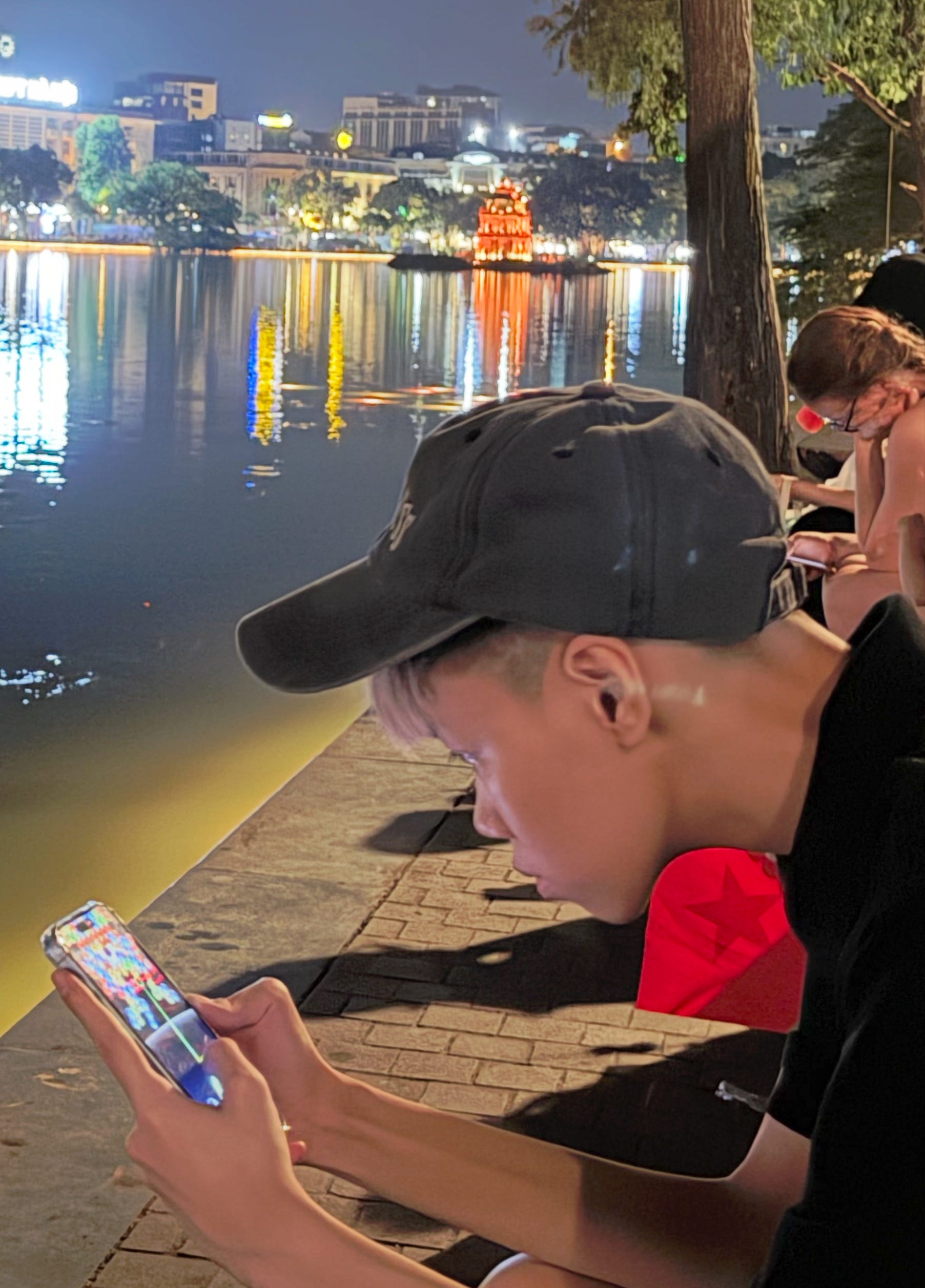
I’ve been through these cycles. The web was going to change everything. Then mobile. Then cloud. Then social. Each time, some predictions came true, most didn’t, and the thing that transformed the world was rarely the thing everyone was fighting about. What I saw in those markets is what every cycle looks like at its peak. Both things true at once.
AI feels different. Not because the hype is bigger, though it is. Because this time I watched my own teams change in real time.
In my experience running international organizations, large and small, I’ve watched a lot of new technology arrive. ChatGPT was different. It was the wake-up call, the moment people realized this was going to be real. But ChatGPT was just the beginning. What followed was a wave of tools built for developers: code assistants, agent frameworks, tooling that understood the whole codebase. They got better week by week, sometimes day by day. Teams that had been grinding through certain problems for weeks started solving them in days. But who thrived and who struggled wasn’t what I expected. It wasn’t about seniority, or experience, or even technical skill. It was about mindset, about willingness to work differently. I’ve never seen that particular dynamic before.
At the same time, at CODAME, I was watching artists grapple with the same technology. And it looked familiar. Every major tech cycle, there are two camps: those who start exploring it as a tool and those who push back, hard. Both camps have always existed. But this time the voices are louder, the fears are more grounded, and the unknowns are real in a way they weren’t before. An artist who resists AI isn’t wrong to. This technology touches something different, something closer to identity and authorship. The debate is sharper because the stakes feel sharper.
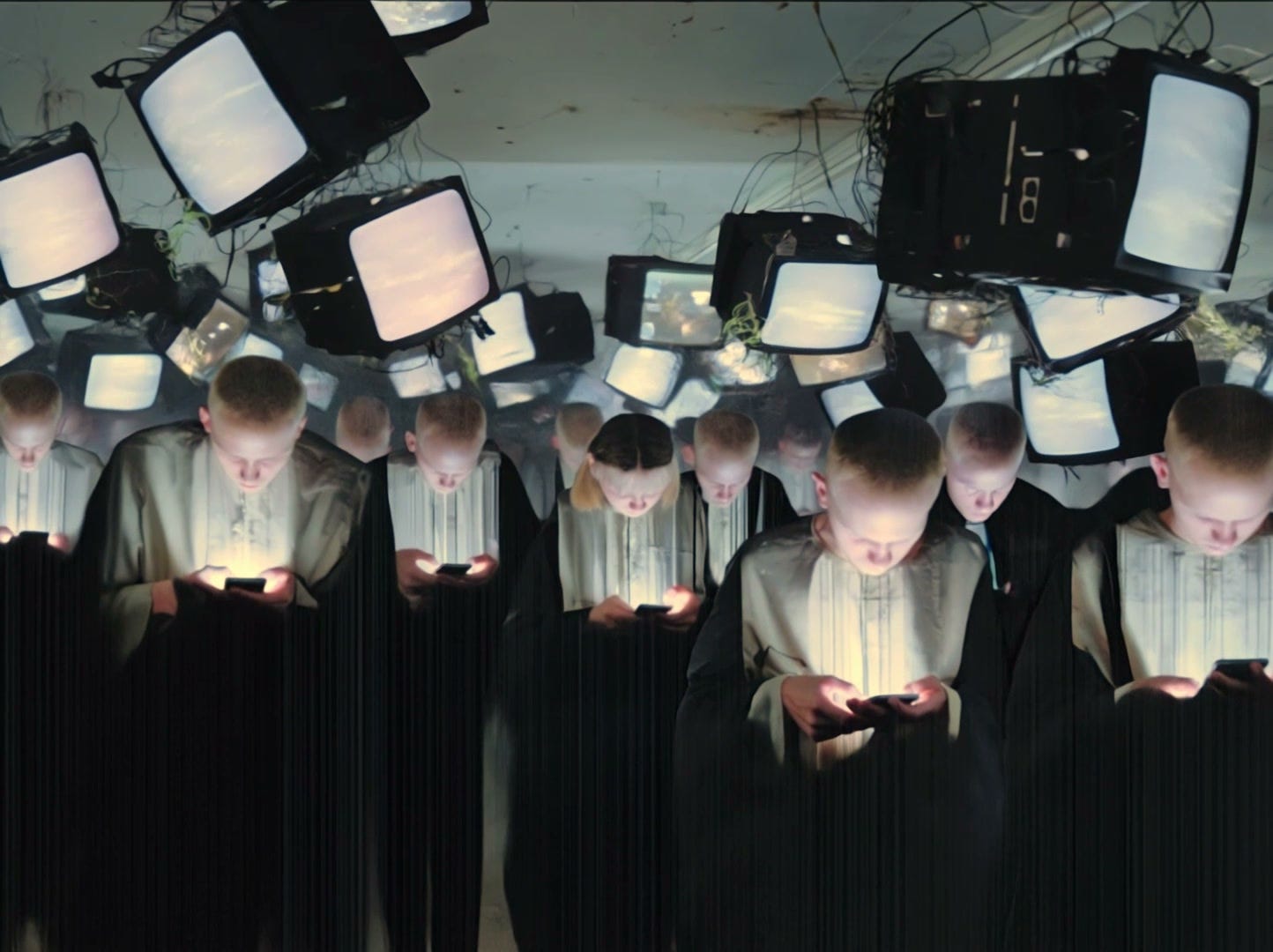
One CODAME artist, katsukokoiso.ai, made a piece called Elsewhere that captures this better than any policy paper I’ve read. Figures absorbed in screens, present in body but somewhere else entirely. Not a condemnation, not a celebration. Just a question held open: what is this doing to us? That’s what artists do that engineers rarely do. They sit with the question without needing to resolve it. We need more of that right now. In some ways, we could all stand to be a little more like artists.
The public conversation has become something else entirely.
There are people who believe AI will end civilization within the decade. There are people who think anyone raising concerns is afraid of progress. The nuance, where most of us actually live, gets flattened.
Here’s what I believe.
AI is more capable than most people know. Not because anyone is hiding it. It’s because the way most people encounter it, writing emails, searching for things, basic tasks, doesn’t come close to what the technology can already do. I’ve watched teams compress weeks of work into hours with agents. The gap between average use and what’s possible is enormous and growing.
At the same time, AI is unreliable in ways that matter. The same system that can contribute to cutting-edge mathematical research can get a simple reasoning problem wrong with complete confidence. That’s not a bug that gets patched in the next version. It’s built into how these systems work. And the real danger isn’t that we know where the gaps are. It’s that we often don’t. Meanwhile we keep giving these systems more power, more autonomy, more trust. That loop is worth paying attention to.
This isn’t entirely new. When mobile took over, when the cloud put software in everyone’s hands, when social media rewired how information spreads and fake news became a real crisis, we had the same argument. Loud concerns, real disruption, and benefits most of us now take for granted. With AI, both sides of that equation are a hundred times bigger. The risks are more real. So are the possibilities.
The debate about AI is really two debates that keep getting confused with each other. One is about risk. What could go wrong, how likely, what do we do about it? The other is about vision. What do we actually want this technology to accomplish?
Most of the noise is about risk. And the risks are real. I’ve seen what happens when automated systems make wrong decisions at scale with no accountability, when the people harmed have no idea what decided their outcome. That matters.
But I know what happens when we only talk about what could go wrong. We build things that never break but also never help. We optimize for the failure case and forget the people who needed something better.
The question that doesn’t get asked enough is the harder one. What are we building toward? Not just “make AI safer.” Safer for what? What does the better future actually look like?
At CODAME ART+TECH we’ve spent years asking a version of that. What does technology want to become in the hands of artists, in the hands of communities, in the hands of people who aren’t optimizing anything but trying to express something true? That question has no final answer. But asking it keeps you honest.
I don’t know what the right policy looks like. Nobody does yet. But I know the conversation needs to be about more than catastrophic risk versus unchecked progress. It needs to be about what we’re actually building, who it’s for, and who gets to shape it.
Those aren’t technical questions. They’re human ones.
I keep coming back to those markets in Thailand and Vietnam. The translation that let me have a conversation I couldn’t have had otherwise. The QR code that replaced a bank. The faces that never looked up. The whole story was there in one place, the same story Elsewhere holds open. Both things true at once. What we build next, and who we build it with, decides which way that picture tilts.
Based on these learnings, and while exploring and adapting to this new way of working and creating products, I’m building ARTEX, a living digital art platform, from Milan.
More at codame.com