
For years, the job pulled us away from the work. That was the deal. You climb, and every step up adds a layer of translation between you and the product. You read summaries of summaries. You see the architecture through slide decks. You learn about design decisions after they’ve been made, in a review, through someone else’s words.
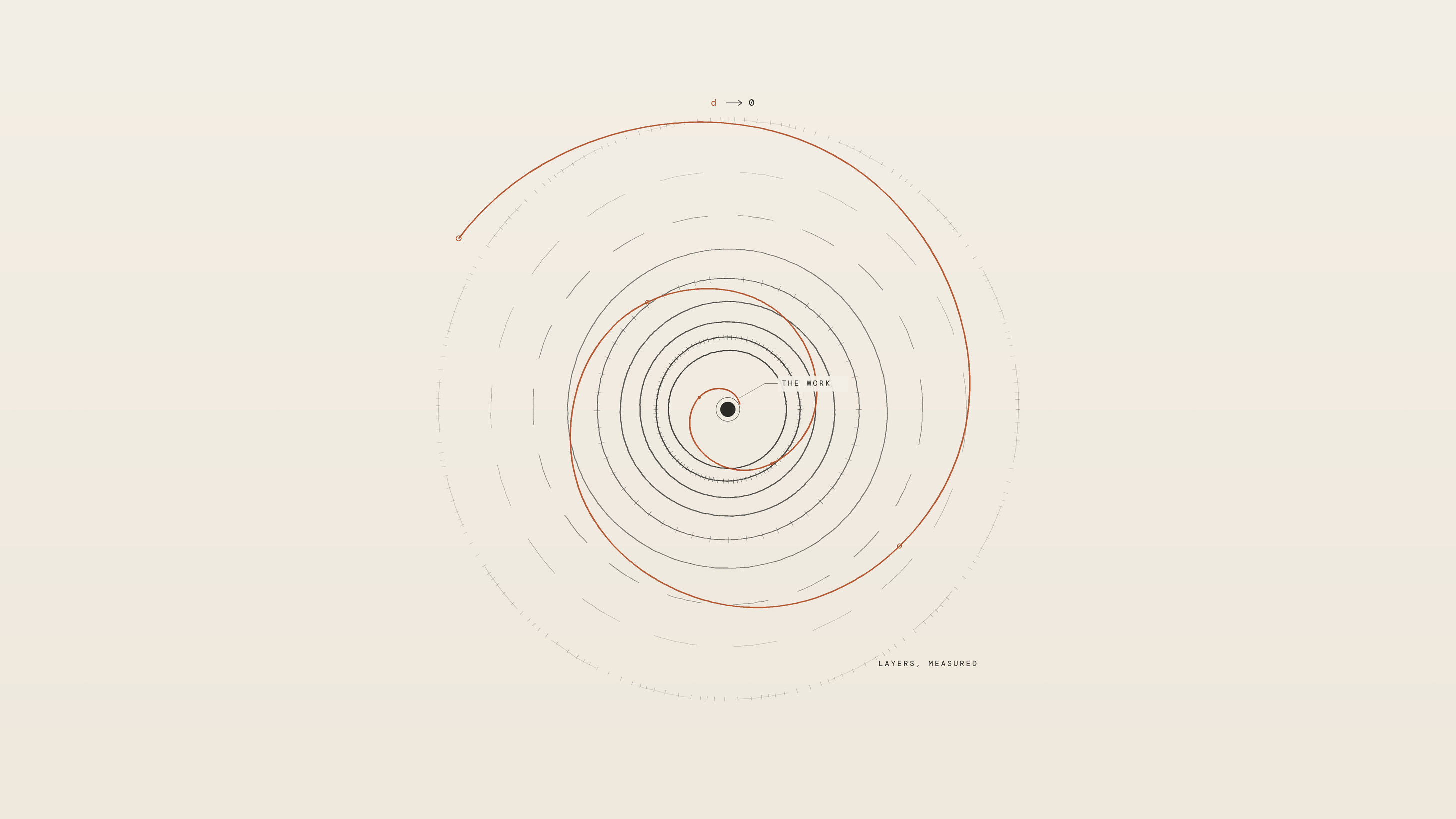
We accepted the distance because it was the price of scale. One person can only type so much, review so much, sit in so many rooms. So we built layers, and the layers did their job, and slowly we became readers of reports about a thing we used to touch with our hands.
For me, the way to fight that distance was always people. Staying in contact with the team at every level, listening to engineers, designers, new joiners. That has always been my way of working and collaborating, and it kept me in touch with reality when reports and dashboards could not. But even the best conversations are still a window into the work, not the work itself.
And the human factor has become even more relevant now. More critical, more important than before. When machines produce the volume, it’s the people who carry the meaning. The judgment, the trust, the taste for what is worth building. Staying close to your teams matters more than it ever did. What changed is that we can now also stay close to the work itself.
That deal just changed.
The distance was a cost, and the cost moved
The reason we stepped back was never that our judgment stopped mattering at the level of the code, the design, the architecture. We stepped back because our time was the most expensive thing in the building, and typing was slow, and reviewing everything was impossible.
AI tools changed the economics of that. Building ARTEX, I can now sit with the actual system, probe it, ask questions of it, sketch an alternative architecture and see it take shape in an afternoon. What used to take me a week of borrowed engineering time takes a conversation. These tools do more than make engineers faster. They shorten the distance between a CTO and the product itself.
This is an invitation, and most of us haven’t opened it yet. You can be close to the product again. Close to the design. Close to the architecture. And you can do it without becoming a bottleneck or taking work away from your teams. Close enough to see clearly what’s really happening, beyond the hype and beyond the doubts.
One thing I want to be clear about, because it shapes everything else. Being closer to the work does not mean taking control back. At Salesforce, trust is the number one value, and after my years there it became part of my DNA as a leader. Getting close to the product only works if your teams know you’re there as a partner, not an inspector. Empowerment matters more in this new world, not less. When context is the fuel and judgment lives everywhere in the team, the leaders who trust and empower their people will always outrun the ones who pull decisions back to the top.
Your experience just became exponential
I expected decades of experience to matter less in this new world. The opposite happened.
When generating code is cheap, everything you’ve learned about what makes systems fail, what makes teams work, what correct actually means in your business, becomes the scarce resource. The machine produces volume. You provide the judgment that sorts it. Every hard lesson you accumulated, every incident you owned, every architecture you regretted, all of that carries over. And because it now gets applied across far more output, it compounds.
What survives is what someone has to sign. As CTOs, we have been signing for years, and we know the weight of it. That skill was always the core of the job. Now it’s almost the whole job.
And yet, think like a kid
Experience compounds only if you keep learning. I have watched people use their twenty years to explain why the new way won’t work. Those twenty years turn into a liability.
Not everything is sorted out. Nobody has solved the junior pipeline. Nobody really knows how much faster we are, versus how much faster we feel. The metrics we trusted are now actively misleading. The ways teams work together are being redrawn in real time, and anyone who claims to have the final answer is selling something.
So the posture that works, I think, is a strange combination. Carry your experience like a compass, and approach the terrain like a kid. Curious. Open. Willing to be wrong in public. Willing to sit down with a tool and be a beginner again, in front of your own team. That last part is uncomfortable. It’s also, I believe, the most powerful signal a technology leader can send right now.
The opportunity
Smaller loops. Fewer layers. Context shared deliberately instead of filtered by default. Teams that are trusted and empowered to own their decisions. Leaders who can touch the product again, guided by everything they’ve learned, humble about everything they haven’t.
The org chart will catch up eventually. It always does, late. What you can change today is your own distance from the work. Close it. Sit with the product. Ask it questions. Bring your scars and your curiosity in equal measure.
The best part of this job was always building. We finally get to do it again.